The Parking Lot Is the First Room
Most security conversations start at the front door. The real first room is the parking lot. It teaches most of what you need about a facility's posture.
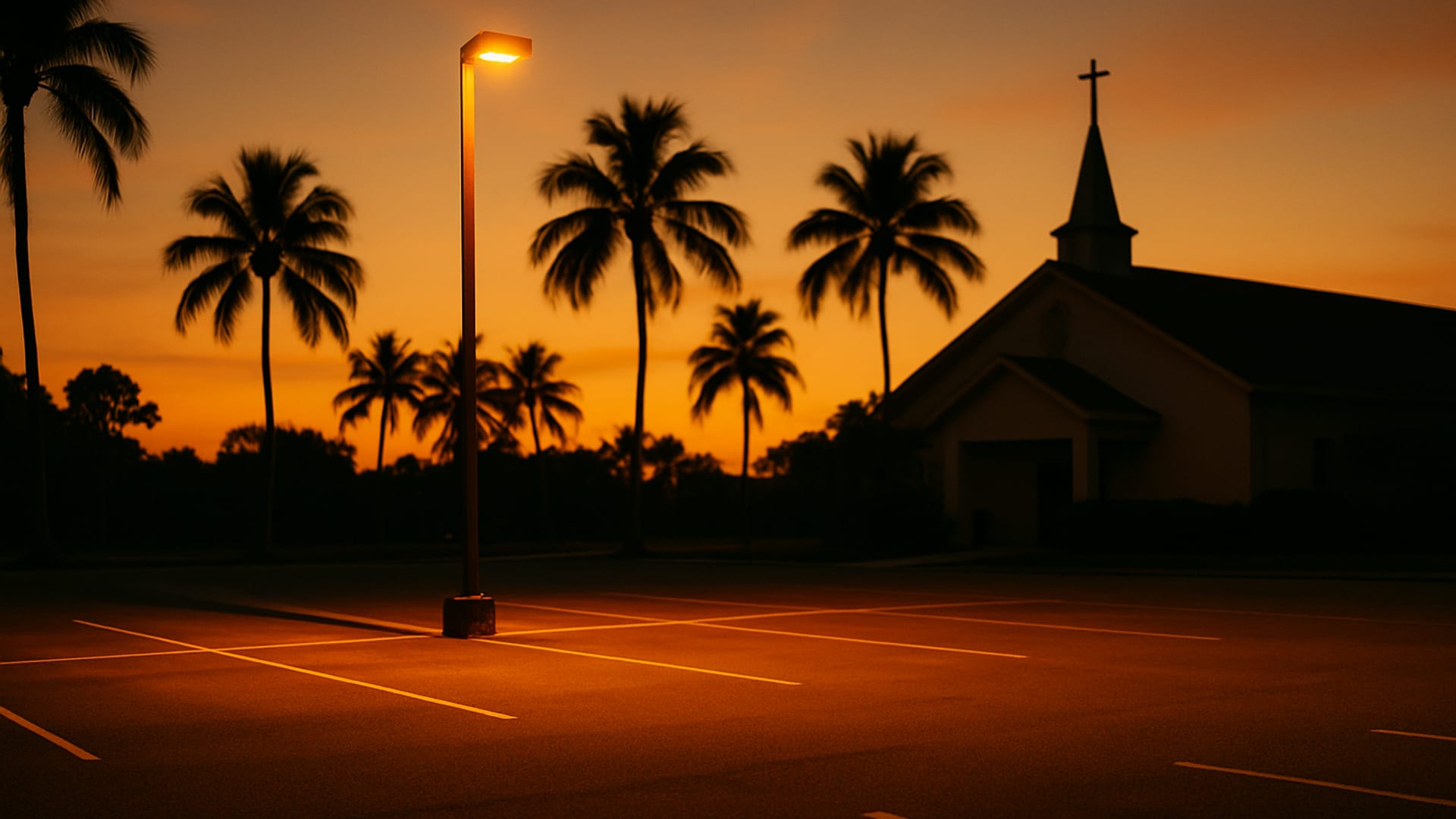
The room before the room.
Most security conversations start at the front door. What does the lock look like. Who is at the greeter position. How does access control work. All of it worth discussing. All of it too late.
The real first room of any facility is the parking lot. It is where almost every visitor forms their first impression of your organization, and it is where almost every serious incident either begins, ends, or passes through. A well-designed parking lot is doing security work long before anyone reaches the front door. A poorly-designed one is quietly undoing everything the rest of your program is trying to accomplish.
What the parking lot tells you.
An experienced observer standing in a parking lot for five minutes can tell you more about a facility’s security posture than an hour with the facilities director. The lot is a concentrated signal.
Things the parking lot reveals:
- Whether leadership pays attention. Neglected lots signal neglected programs.
- Whether volunteers are trained. Trained greeters position themselves outside during arrival windows.
- Whether the facility has a culture of observation. Trained eyes look up when a car approaches.
- Whether emergency vehicle access has been thought through. Many lots cannot accommodate an EMS rig.
- Whether the first layer of the perimeter is a real layer or a space for cars.
You can tell all of this without entering the building.
The five layers of a parking lot.
A thoughtful parking lot operates on five distinct layers, each reinforcing the others.
Layer 1: Approach and visibility
The view from the road. Is your sign visible and cared for? Is the landscape trimmed enough that a driver approaching can see the lot? Neglected approach signals neglect, and neglect invites problems.
Layer 2: Flow
The pattern of how cars enter, park, and leave. Good flow funnels arrivals past known points where observation happens. Poor flow scatters arrivals across multiple uncontrolled entries.
Layer 3: Lighting
Uniform coverage. No dark patches at the edges. Lighting that works at the moment it matters (just after sunset, not midday). Modern LEDs have made this inexpensive enough that there is no excuse for a facility in 2026 to have a dark corner near an entrance.
Layer 4: Observation
Cameras with real coverage, and staffed presence during high-traffic windows. The two together. A camera alone catches the incident after the fact. A staffed presence prevents it.
Layer 5: Connection to the building
The walk from the lot to the door. Is it visible? Is there a transition zone where a greeter can see arrivals? Or do people vanish around a corner between car and entrance?
Each layer on its own does modest work. The five layers together do substantial work.
The Southwest Florida parking lot.
Our region introduces specific parking lot variables worth naming.
Seasonal volume
Winter-season snowbird attendance can double a congregation or event crowd. Parking lots designed for normal volume get stressed. The overflow parking arrangement, usually ad-hoc, often has no trained eyes on it.
Heat and humidity
People in Florida parking lots move differently than in cooler climates. They linger less, they cover distances in shade when possible, and they are more vulnerable to heat-related medical events. Your parking lot security protocol should account for heatstroke response the same way it accounts for other medical situations.
Water proximity
Many SWFL facilities border canals, retention ponds, or drainage features. A disoriented elderly resident or a curious child in the parking lot is sometimes one wrong turn from water. This is a specific supervision consideration that doesn’t exist in every region.
Hurricane aftermath
Post-storm, parking lots sometimes serve as staging areas for relief supplies, generator refueling, or temporary shelter overflow. These functions are good. They also extend the hours the parking lot is active and change its normal patterns. Protocol should cover it.
The simplest upgrade that moves the needle.
If your facility can afford only one parking lot security upgrade, it is not a camera. It is a trained human presence during arrival and departure windows.
A single greeter, usher, or volunteer positioned at the edge of the parking lot during the first fifteen minutes and the last fifteen minutes of a service or event catches:
- Visitors who do not quite know where to go
- Medical issues developing in a car that has just pulled in
- Families in conflict before the conflict becomes visible
- Unfamiliar vehicles that warrant gentle attention
- The disoriented elderly resident a daughter was supposed to drive but did not
- The child whose adult just drove away without them
None of those catch reliably on a camera. All of them catch reliably with a trained person.
Cameras in the lot.
Cameras are useful. They are also commonly mis-deployed in parking lots. Three common mistakes:
The wrong angle
A camera mounted at the edge of the lot pointing across it captures silhouettes and license plates at extreme angles. Useful for forensics, not useful for identification. Cameras should be angled to see faces as drivers exit vehicles, which usually means a camera placed at chest height aimed at the approach path, not at the lot from 20 feet up.
The wrong lens
Wide-angle lenses capture the whole lot and identify no one. Narrow-angle lenses capture specific zones clearly. Most facilities benefit from one of each, placed thoughtfully.
The never-watched feed
Cameras that record to a hard drive no one checks are catching incidents after the fact. If footage is only reviewed after something goes wrong, the camera is a forensic tool, not a preventive one. For prevention, a camera feed needs a person watching, at least during critical windows.
The Sunday morning or Tuesday evening rhythm.
For a church, the critical parking lot window is the hour surrounding each service. For a daycare, it is the thirty minutes surrounding drop-off and pickup. For a nonprofit event, it is the first and last thirty minutes of guest arrival and departure.
These windows are when parking lots run hot. During them, a facility should have:
- A trained human in the lot, not in the building
- Clear communication with the inside team
- Known escalation paths for specific concerns
- The parking lot lighting actually on if the window crosses sunset
Outside of these windows, the parking lot can operate more quietly. But during them, it is an active operating space.
The verse names discernment as the foundation of prudence. The parking lot is where discernment has the chance to begin. What is seen there, early, often resolves before it becomes anything. What is not seen there compounds into the incident you read about later.
A short assessment you can run this week.
- Walk your parking lot at the exact time your next service or event begins. Stand in the far corner. Observe for ten minutes.
- Note every dark spot, every blind corner, every unobserved path from car to door.
- Return one hour after sunset. See what your parking lot actually looks like at the hour it matters.
- Ask the most observant volunteer at your organization what they have noticed in the lot that leadership may not have heard about. You will learn something.
- Commit to a single change within 30 days, one change within 60, and one change within 90. Small, visible, sustained improvements.
Starting with the first room.
For organizations in Fort Myers, Cape Coral, Naples, or Port Charlotte wondering where to start a security program, the parking lot is often the right answer. It is visible to everyone, it is inexpensive to improve, and the improvements compound. People notice when a facility cares about the lot. Visitors, staff, volunteers, and the people looking for easier targets all notice.
For a broader picture of how the parking lot fits within a full perimeter, read our gold-standard article on the perimeter doctrine and our piece on camera placement and what a coverage map actually looks like.
If you want us to walk your lot with you, we would be glad to. No theater. Just a careful conversation about the first room of your facility.
Ready when you are
Build the perimeter before it matters.
Most engagements start with one honest conversation and a walk of your space. What happens next depends on what we find.
Book a walkthroughRelated Insights
Keep reading.

Layers, Not Walls: The Short Version of the Perimeter Doctrine
Walls are brittle. Layers are patient. A short, plainspoken version of the perimeter doctrine, for leadership teams making their first security decisions.

The Perimeter Doctrine: Why Prevention Beats Response
The fastest response in the world is still a response. Here's why we build physical security programs that stop problems at the perimeter, not the hallway.
The 30/60/90-Day Security Action Plan Explained
A good audit ends with a 30/60/90-day plan. Here's how P23 decides what goes where, why pacing matters, and how to use the plan with leadership.