Priorities of Life in a Mass-Casualty Moment
In a mass-casualty moment, care is given by priority, not by sequence. Here's how civilian responders think about who to help first, and why.

Who gets help first is not who is nearest.
In a mass-casualty moment, the instinct of most untrained people is to help the person they see first, the person making the most noise, or the person they know. All three instincts produce worse outcomes than a brief, trained moment of triage.
Priorities of life is the discipline of stepping back for three seconds, scanning the scene, and beginning care in the order most likely to save the most lives. It is not cold. It is the opposite of cold. It is the most compassionate response available in a situation where attention is scarce and outcomes are at stake.
The military origin, adapted for civilians.
Priorities of life in civilian mass-casualty contexts trace back to tactical combat casualty care doctrine developed by the U.S. military. The principle is simple: care must be allocated by probability of survival benefit, not by order of encounter.
The civilian adaptations most commonly taught are:
- START (Simple Triage And Rapid Treatment): The adult-population standard, developed by the Hoag Hospital and Newport Beach Fire Department in the 1980s.
- JumpSTART: The pediatric adaptation, designed for triaging children with different physiological baselines.
- SALT (Sort-Assess-Lifesaving-Treatment/Transport): A more recent consolidated framework endorsed by the National Disaster Life Support Foundation.
For civilians, deep technical knowledge of these systems is not required. The principles, understood and practiced, are sufficient for the first critical minutes.
The priority categories.
Most triage systems sort casualties into four categories, usually color-coded.
- **Red (Immediate):** Life-threatening but treatable injuries. Severe bleeding, airway obstruction, serious chest wounds. Treat first.
- **Yellow (Delayed):** Serious but stable injuries. Broken bones, non-life-threatening wounds. Can wait for treatment without dying.
- **Green (Minor):** Walking wounded. Cuts, bruises, minor injuries. Can self-evacuate or wait.
- **Black (Expectant):** Injuries incompatible with survival under current conditions. Comforted, but not treated first in a resource-scarce moment.
The black category is the moral heart of triage and the hardest piece for civilians to accept. In a scene with many wounded and few responders, spending five minutes on someone whose survival is not possible under current circumstances may cost the life of three others who could be saved.
It is not a judgment about the worth of the person. It is a judgment about the allocation of limited medical attention in the first minutes before help arrives.
What civilians should focus on.
Full triage is for trained EMS and hospital personnel. What civilians can do in the first minutes, trained in priorities of life:
Quick scan (10-15 seconds)
Walk through the accessible area. Count wounded. Note who is moving. Note who is silent. Note approximate severity. The scan is not a full assessment. It is the situational awareness that makes the next decisions better.
First triage: can they walk?
Anyone who can get up and move is classified green (walking wounded). Direct them to a safe assembly point outside the immediate scene. Walking wounded are low priority for immediate care but need to be moved out of the way, both for their own safety and so responders can focus on those who cannot move.
Second triage: are they breathing?
For the remaining wounded, quickly check breathing. Someone not breathing in a mass-casualty scene is, painfully, often in the black category. Civilian responders should not spend extended time attempting to resuscitate one person when others have treatable wounds requiring immediate attention.
Third triage: are they bleeding?
For wounded who are breathing but cannot walk, check for life-threatening bleeding. Apply pressure, pack wounds, or apply tourniquets. These are the red cases. These are where civilian responders produce the highest-leverage outcomes in the first minutes.
Fourth: stabilize and wait
Keep patients warm. Keep them still. Continue to monitor breathing. Wait for professional responders. Your job, once the immediate life-saving measures are underway, is to hold until help arrives.
When the scene is not yet safe.
Priorities of life decisions cannot begin until the scene is safe to enter. In an active threat scenario, that often means waiting until law enforcement has cleared the immediate area. Civilians who attempt to render aid during an ongoing active threat often become additional casualties.
Avoid, Deny, Defend remains the first framework. Medical response follows the security response. The exceptions are narrow: if you are already present, already behind cover, already out of the line of fire, and a wounded person is within arm’s reach, you can begin care on that person. For everyone else, the responsible first action is to secure yourself and others, then provide care once the scene permits.
The West Freeway Church parallel.
At the West Freeway Church of Christ incident on December 29, 2019, the security team’s response was trained and fast. The medical response that immediately followed was also trained. Members of the congregation with medical backgrounds began care on the injured within seconds of the threat being neutralized.
The combined effect of rehearsed security response and rehearsed medical response is what produced the outcome of the incident. Neither would have been sufficient alone. The lesson applies broadly: active threat training should not end when the threat is neutralized. It should continue into the medical response phase.
Building the capability.
For organizations in Southwest Florida looking to build priorities of life capability, the right sequence is typically:
- Foundation: Stop the Bleed training for all staff and key volunteers
- Build: CPR and AED certification for a larger subset of staff
- Add: A priorities of life workshop for the security team and senior staff (2 to 4 hours)
- Integrate: Scenario practice that combines security response with medical triage
- Refresh: Annual rehearsal, with specific attention to the handoff to EMS when they arrive
The capability takes a year to build and a year to internalize. Training that stops at a single session does not stick.
The verse is often read as an emotional or spiritual charge. It is also, read literally, a practical one. Bearing one another’s burdens in a mass-casualty moment means knowing how to help. It means having the training to be useful. It means being the person who acts thoughtfully when the people around you need thoughtful action most.
The Southwest Florida EMS reality.
EMS response times in Lee, Collier, and Charlotte counties vary by location. Urban Fort Myers and Cape Coral have relatively short response times. More rural portions of each county can have response times exceeding 15 minutes. In a multiple-casualty incident, even strong urban response can mean multiple EMS units arriving in staged waves, not simultaneously.
The implication: civilian responders may be the only medical care available for the first 10 to 20 minutes in a mass-casualty scenario. Priorities of life is not a nice-to-have. For organizations serving significant crowds, it is the framework that determines outcomes in that window.
Who to train.
Priorities of life training is best reserved for:
- Security team members
- Senior leadership
- Designated first-aid responders
- Medical professionals who may already be among staff or volunteers
- Anyone whose role makes them a likely first responder in a large event scenario
Not every volunteer needs this depth. A church with 20 ushers does not need all 20 trained in triage. It needs the two or three most experienced team members trained deeply, and the rest trained in Stop the Bleed, CPR, and Avoid, Deny, Defend. Layered training matches layered roles.
The humility of the framework.
Priorities of life training has a secondary effect that is worth naming. It produces humility in responders. Trained people understand how much they do not know, how much depends on getting professional care quickly, and how modest their own role really is in the full sweep of an emergency response.
Humility is not a bug. It is a feature. Responders who understand the limits of their capability are more likely to call for help early, stay within their scope, and hand off cleanly when EMS arrives. Organizations built on those habits produce better outcomes than organizations built on bravado.
If your organization in Fort Myers, Cape Coral, Naples, or Port Charlotte is ready to add priorities of life to its training rotation, we would be glad to help structure the program and deliver the training. The work is humane, the framework is mature, and the capability compounds over years.
Ready when you are
Build the team that acts before help arrives.
Selection, policy, quarterly drills, and train-the-trainer - plus the curriculum (Avoid/Deny/Defend, tactical triage, stop-the-bleed). Taught by a combat veteran. Built to outlast any one consultant.
Build your Defender teamRelated Insights
Keep reading.
Avoid, Deny, Defend: The Doctrine Everyone Should Know
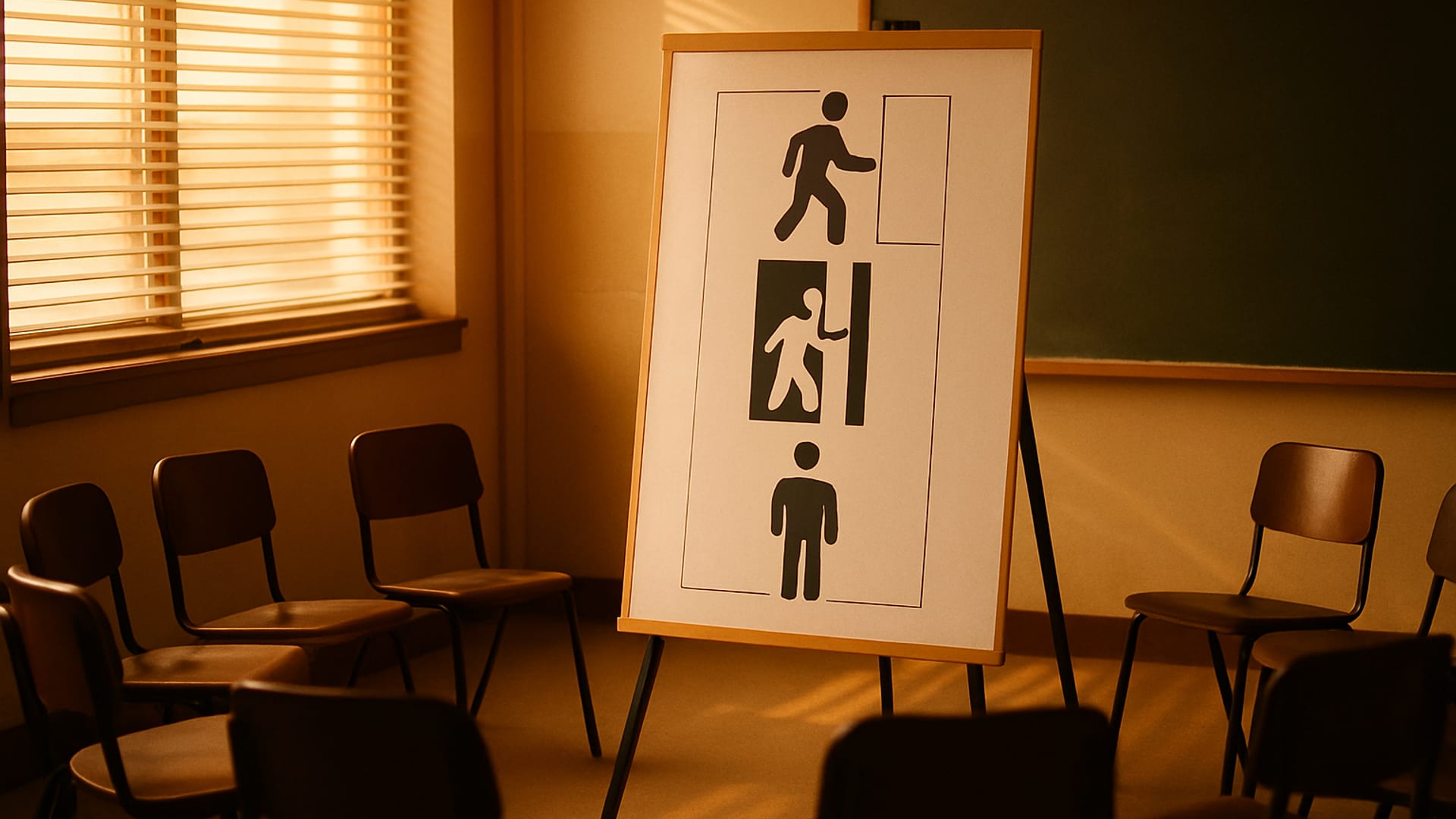
Avoid, Deny, Defend is the civilian doctrine for active threats from Texas State's ALERRT program. Here's what it is, why it matters, and how it gets taught.
Scenario-Based Practice vs. Lecture: Why Repetition Beats Reading
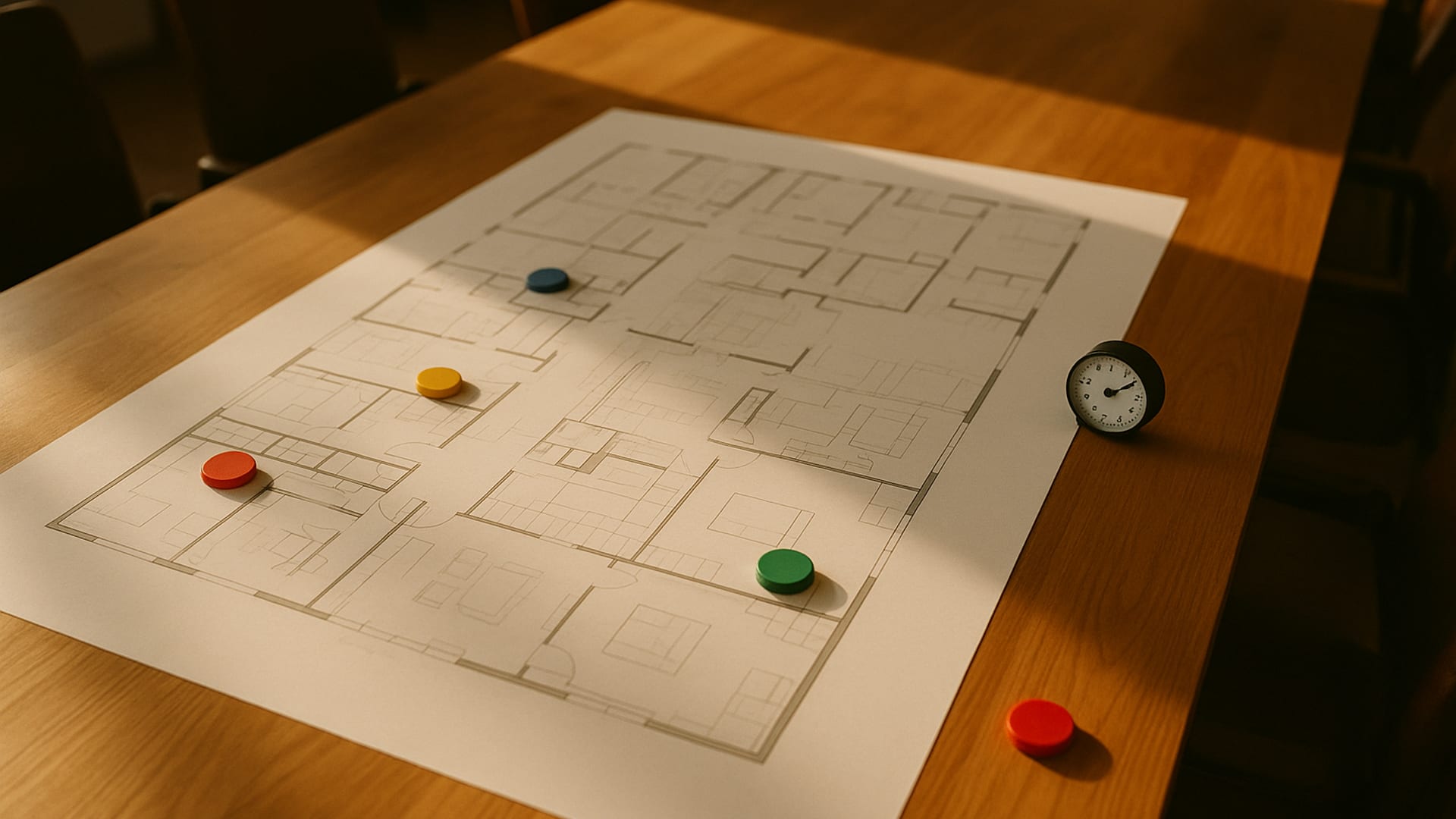
Security training that sticks is training that was practiced. Here's why scenario repetition outperforms lecture, and how to build rehearsal into your program.
Stop the Bleed 101: Tourniquets, Wound Packing, and Direct Pressure
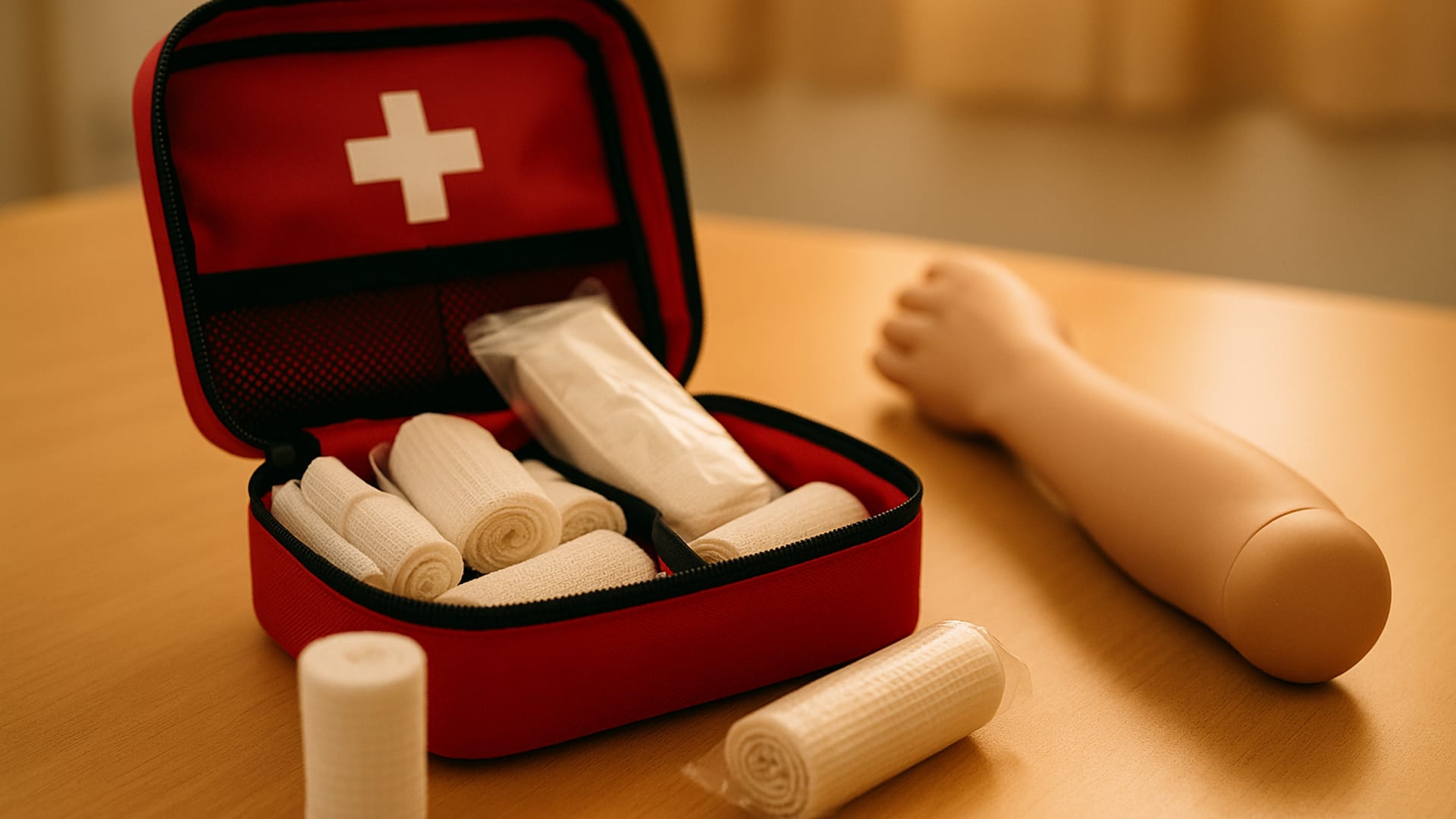
Massive bleeding is survivable if treated quickly. Stop the Bleed teaches civilians three techniques that save lives. Here's what your team needs to know.