Role-Appropriate Training: Ushers, Caregivers, Staff, Volunteers
One training program does not fit every role. Here's how to match security training to the specific jobs your staff and volunteers actually do.

The greeter’s job is different from the facility manager’s.
Every organization has a dozen distinct roles, each with its own security exposure. The greeter at the lobby has different risks and different responsibilities than the senior pastor. The children’s ministry volunteer has a different job than the facilities manager. The nonprofit event staff member has a different job than the executive director.
One-size-fits-all training does not actually fit anyone. It is usually too generic for the people who need detail and too long for the people who need basics. Role-appropriate training respects the specific work each person does.
The rough taxonomy of roles.
Most small and mid-size organizations have three to five distinct security-relevant roles. Each has a different training profile.
Public-facing front-line roles
Greeters. Ushers. Front-desk receptionists. Check-in staff. These people are the first to interact with everyone who enters. They are the detection layer.
Training emphasis:
- Behavioral observation: recognizing signs of distress, agitation, or unusual behavior
- De-escalation basics for common conflict situations
- Communication protocols: who to alert, how to alert them, and when
- Medical response awareness: recognizing emergencies early
- Visitor management: consistent check-in, badging if applicable, escorted access
Safety team and security response roles
The formal or informal team that responds when something happens. Church safety teams. Daycare senior staff with emergency responsibility. Senior living shift leads.
Training emphasis:
- Avoid, Deny, Defend doctrine, deeply understood
- Stop the Bleed and CPR/AED certification
- Scenario-based rehearsal of specific facility-relevant emergencies
- Coordination with law enforcement and EMS during active response
- Priorities of life framework for multi-casualty situations
- Post-event response: medical, emotional, and operational
Caregiver and children-specific roles
Daycare teachers. Children’s ministry volunteers. Senior living caregivers.
Training emphasis:
- Pediatric or geriatric-specific response protocols
- Evacuation and shelter with vulnerable populations
- Reunification or family communication procedures
- Recognition of abuse or neglect indicators
- Medical emergency management (seizure, allergic reaction, fall)
- Role-specific denial techniques (securing a classroom, supporting a non-ambulatory resident)
Back-office and administrative roles
Bookkeepers, accountants, executive assistants, administrative staff.
Training emphasis:
- Social engineering and phishing awareness
- Cash handling and fraud prevention
- Data privacy and donor protection
- Visitor and vendor verification protocols
- Communication during incidents (media, families, board)
Leadership roles
Executive directors, senior pastors, facility managers, department heads.
Training emphasis:
- Strategic security program oversight
- Decision-making during incidents
- Media and communications during and after events
- Liaison responsibilities with law enforcement, insurance, and legal counsel
- Post-event organizational care (staff, members, donors, families)
The common baseline.
Even role-appropriate training benefits from a common baseline that every team member receives. The baseline typically includes:
- Basic situational awareness
- The organization’s emergency action plan, in summary form
- How to call for help (who to alert, what to say)
- The specific protocols most relevant to the facility (check-in, evacuation, lockdown)
- Awareness of the broader security program and how their role fits
The baseline is short (typically 60 to 90 minutes) and happens during onboarding for every staff member and volunteer. Role-specific training is layered on top.
The senior staff difference.
Senior staff and leadership face a specific training challenge. Their time is extremely constrained. Their attention is in high demand. Training that bores them is training they will not return to.
What works for leadership:
- Focused, time-boxed sessions (usually 2 hours or less, no all-day events)
- Strategic framing that treats them as decision-makers, not responders
- Case studies from peer organizations, which they find compelling
- Clear articulation of what the training prepares them to do
- Follow-up artifacts they can reference during a real event
What does not work:
- All-day “training camps” that take leaders out of operations for days
- Repetitive drills that cover the same ground as entry-level training
- Sessions that focus on operator-level detail they will never execute themselves
- Training that feels more like compliance than development
The volunteer challenge.
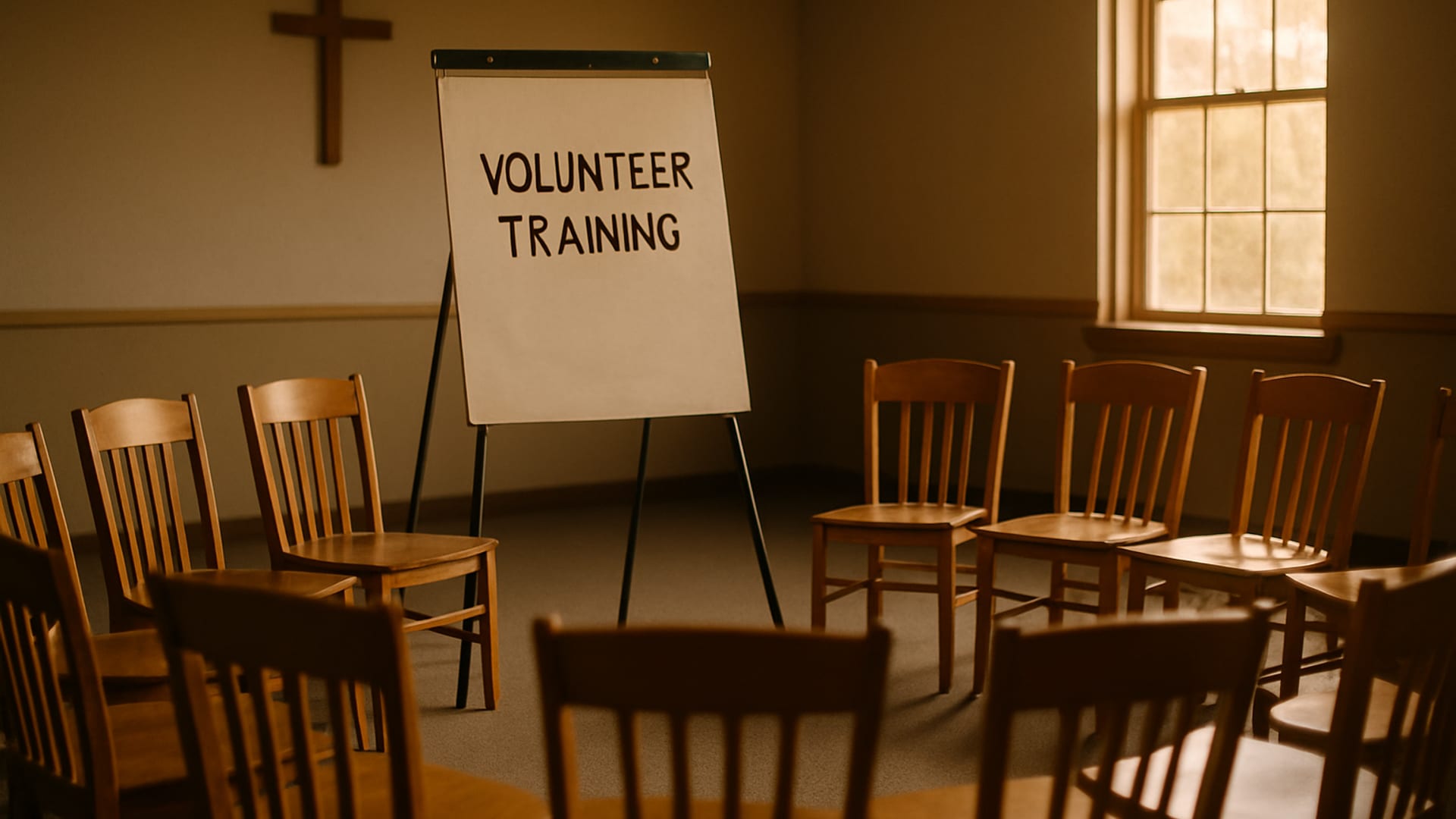
Volunteers present unique training challenges. They often come infrequently. They have lives and commitments beyond the organization. Their attendance at training sessions is voluntary. Their tenure varies widely.
Effective volunteer training typically:
- Runs in short sessions (60 to 90 minutes, not half-days)
- Happens on a schedule that respects typical volunteer availability (weekends, early evening)
- Is self-contained per session (a volunteer who misses one session can still benefit from the next)
- Focuses on role-specific essentials rather than comprehensive coverage
- Includes pathways for volunteers who want to develop further (e.g., safety team track)
Organizations with strong volunteer training programs in Fort Myers, Cape Coral, Naples, and Port Charlotte generally have one thing in common: they treat volunteer training as a first-class activity, not as an afterthought. The investment pays back in volunteer retention and capability.
The Hurricane Ian example of role training in action.
During and after Hurricane Ian in 2022, the value of role-specific training became especially visible. Organizations whose staff and volunteers had been trained for their specific roles handled the storm and recovery period better than those who had received generic training.
Specific examples:
- Daycare staff trained in pediatric evacuation moved children more effectively than those without specific training
- Senior living caregivers trained in shelter-in-place decisions for resident populations made better calls on who to evacuate and who to hold
- Nonprofit event staff trained in crowd management handled post-storm distribution events with less chaos
- Church safety teams trained in communications handled the scattered congregation reunification process better
None of these staff were doing jobs that a fully generic training would have prepared them for. Role-specific training showed up.
Paul’s metaphor of the body with many members is often read as ecclesiological. It applies operationally as well. Different roles have different functions. The hand does not do what the foot does. A training program that respects the distinct functions of each role produces a more capable body overall.
Building a role-appropriate program.
The practical path for organizations looking to develop role-appropriate training:
- Map your actual roles. Not job titles, roles. What does each person actually do?
- Identify the security-relevant behaviors each role is expected to perform
- Design a common baseline that every team member takes
- Design role-specific modules that layer on top
- Calibrate time commitment to role criticality: more training for safety team, less for general volunteer
- Run the program on a scheduled rhythm, not ad-hoc
- Track completion and refresh cadence for every role
- Iterate based on what works, using feedback from trainees
The program will evolve. The first year will be the roughest. By year three, role-appropriate training will feel like the natural way the organization operates.
The cost of generic training.
Organizations that stick with generic training tend to experience common failures:
- Low engagement and declining attendance over time
- Gaps where specific role capabilities are needed but were not trained
- Resentment from leaders who feel training wastes their time
- Safety team members under-prepared for their actual responsibilities
- Volunteers who never quite know what to do when something happens
All of these are avoidable. The avoidance is not through more generic training. It is through training that fits the roles actually being performed.
Where to start.
If your organization in Fort Myers, Cape Coral, Naples, or Port Charlotte has been running generic training and wants to shift toward role-appropriate programming, we would be glad to help structure the transition. The work starts with mapping current roles, designing the right baseline, and planning the layered role modules that build on it. The result is a training program your team actually engages with and a capability that compounds year over year.
Ready when you are
A team program, not a one-off seminar.
Role-appropriate, recurring, practiced. The capability lives with your people - we're there to build it and help you sustain it.
Plan a team programRelated Insights
Keep reading.

Train-the-Trainer: In-House Capability That Survives Staff Turnover
External training is important. Train-the-trainer builds the capability that stays when you graduate. Here's how it works, and when to invest.
Volunteer Onboarding: Where Security Culture Is Built (or Isn't)
Every volunteer's first day shapes their security culture for years. Here's how to build onboarding that produces observant, trained, engaged volunteers.

The 30/60/90-Day Security Action Plan Explained
A good audit ends with a 30/60/90-day plan. Here's how P23 decides what goes where, why pacing matters, and how to use the plan with leadership.