Sandy Hook (2012): The Access Control Lesson That Still Isn't Learned
On December 14, 2012, 26 people died at Sandy Hook Elementary. The access control lesson it revealed still applies to schools, daycares, and children's ministries.
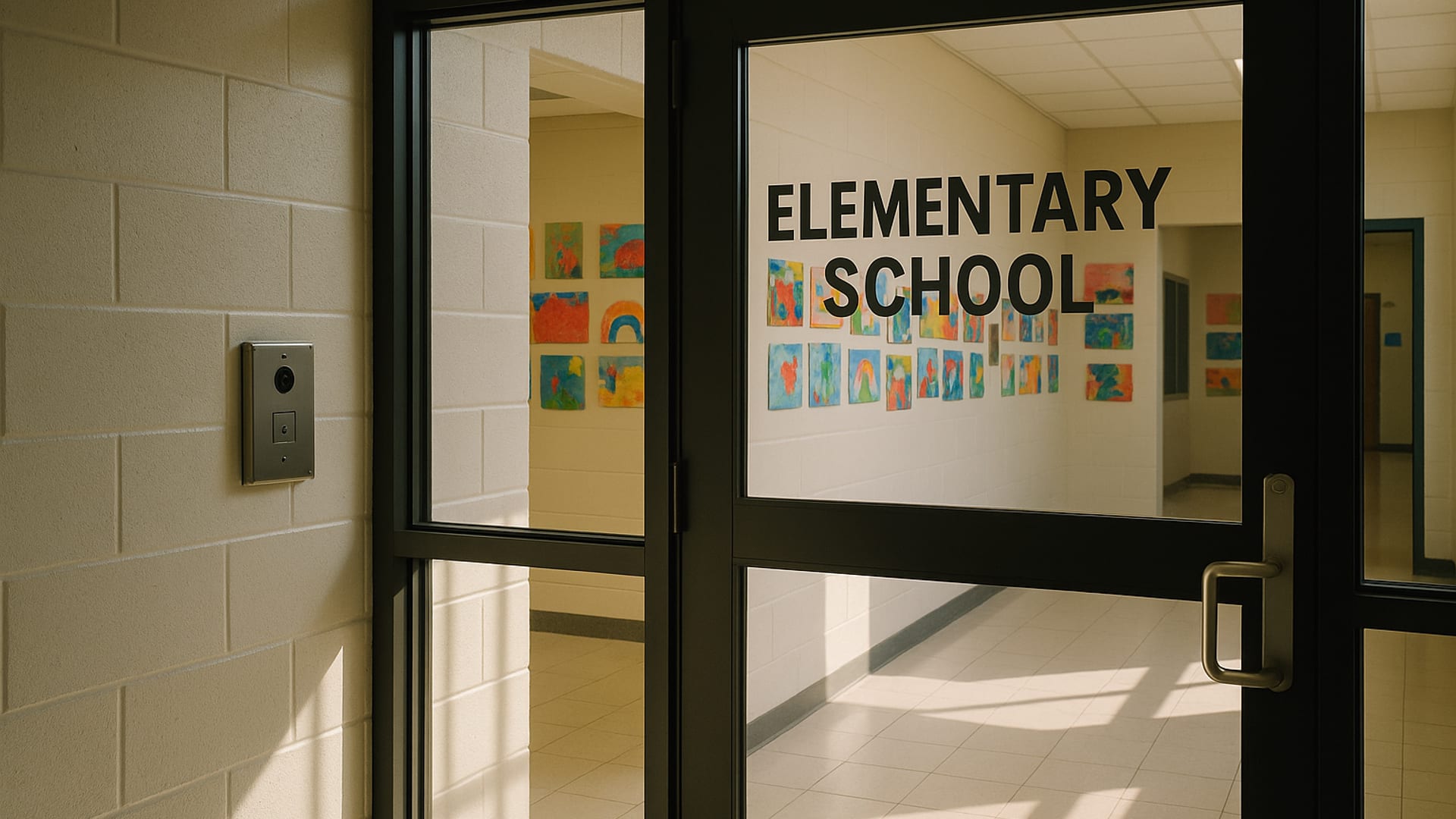
The morning of December 14, 2012.
Sandy Hook Elementary School in Newtown, Connecticut, was a small rural school that had implemented what was considered forward-thinking security for its time. The front door locked automatically. Visitors had to be buzzed in through an intercom system after verification. A staff member at the front office controlled the entry.
At approximately 9:35 AM on December 14, 2012, a 20-year-old man approached the school entrance. He had not been buzzed in. He did not attempt verification. He shot through the glass adjacent to the locked front door and stepped into the school.
Over the next several minutes, he killed 20 first-grade students and 6 staff members, including principal Dawn Hochsprung and school psychologist Mary Sherlach. The event ended when first responders arrived and the attacker ended his own life.
The victims deserve to be named.
Any discussion of what Sandy Hook taught must begin by naming those who died. They were:
Charlotte Bacon, Daniel Barden, Olivia Engel, Josephine Gay, Dylan Hockley, Madeleine Hsu, Catherine Hubbard, Chase Kowalski, Jesse Lewis, Ana Marquez-Greene, James Mattioli, Grace McDonnell, Emilie Parker, Jack Pinto, Noah Pozner, Caroline Previdi, Jessica Rekos, Avielle Richman, Benjamin Wheeler, and Allison Wyatt.
And the six adults who died protecting them: Rachel D’Avino, Dawn Hochsprung, Anne Marie Murphy, Lauren Rousseau, Mary Sherlach, and Victoria Soto.
Every security lesson that follows is drawn from the loss of these twenty children and six adults. The learning we do in their memory is small compensation. We do it anyway, because continuing to protect children is how we honor those who could not be protected that day.
The physical layer gap.
Pre-2012 school security often treated the locked front door as the primary protective barrier. Lock the door. Verify visitors. Admit those who belonged. This was a meaningful improvement over the open-access model that had preceded it in many schools.
What the attacker demonstrated is that a locked door made of standard glass is not actually a barrier. It is a visual signal. It is a psychological barrier. It is not a physical barrier, and a determined attacker with a firearm can defeat it in seconds.
The lesson that emerged is the principle of layered access control.
What layered access control means
- Physical hardening of the primary entry: impact-rated glass, reinforced door frames, heavy-duty hardware
- A second barrier inside the primary entry: vestibule, mantrap, or sally port design that forces verification before building access
- Visual verification of visitors before granting access past the secondary barrier
- Interior doors that can be secured quickly to establish additional layers during an active threat
- Communication systems for coordinating response across the layers
Layered access control is harder to defeat than single-layer control. Each layer requires time to defeat. Each layer buys seconds for response, communication, and protection. The time accumulates into minutes, which is the time within which active threat events typically resolve.
What changed after Sandy Hook.
Substantial investment followed Sandy Hook, driven by federal and state grants, foundation funding, and renewed congregational and community commitment.
Physical hardening
Many schools, daycares, and children’s facilities invested in ballistic-rated or impact-rated glass at primary entries. Some installed vestibules or mantraps. Door hardware was reinforced. Exterior lighting was enhanced.
Policy development
Emergency action plans became more rigorous. Specific protocols for lockdown, evacuation, and reunification were developed or strengthened. Staff training rolled out nationally.
Coordination with law enforcement
Schools established or deepened relationships with local law enforcement. School Resource Officers became standard in many jurisdictions. Active shooter response training for law enforcement prioritized schools.
Mental health awareness
Beyond physical security, Sandy Hook accelerated conversations about mental health, threat assessment, and behavioral intervention. The connection between identifying concerning behavior and preventing violence became clearer.
Federal program growth
Federal grants for school security, including specific programs for nonprofits serving children, grew substantially in the years following.
The limitations of what changed
Not every school implemented comprehensive hardening. Budget constraints, political decisions, and facility constraints left many schools with incomplete upgrades. Sandy Hook’s lessons have been partially learned, not fully learned. Schools continue to experience attacks, and each attack surfaces how much of the post-Sandy-Hook reform still has not reached every facility that needs it.
The specific application for daycares and children’s ministries.
Daycares and church children’s ministries often operate in facilities originally built for other purposes. Conversions. Additions. Space-sharing arrangements with schools or adult programs. The result is often access control that is less layered than what modern school design standards would produce.
For these facilities, the Sandy Hook lessons apply directly.
Single-point entry
Every child-serving facility should funnel all visitor arrivals through a single, controlled entry. Alternative entries should be locked continuously and used only for specific purposes (staff entry with their own credentialed access, emergency egress).
Visual verification
Before a visitor is granted access past the primary entry, staff should visually verify them. This does not require elaborate technology. It requires a trained staff member positioned to see visitors before granting access.
Physical hardening
Primary entries should include hardening beyond standard residential construction. Impact-resistant glass or film. Reinforced door frames. Heavy-duty locks. For facilities in Southwest Florida, hurricane-code construction provides incidental hardening that works in favor of security.
Layered interior
Once past the primary entry, interior doors should be able to secure quickly. Classrooms should have doors that lock from the inside. Windows to hallways should be operable in ways that can quickly be obscured if lockdown is required.
Rehearsed protocol
All staff should know and have rehearsed the specific protocol for active threats, severe weather, medical emergencies, and other scenarios. Rehearsal matters, as addressed in other articles in this library.
The Southwest Florida context.
Several regional factors apply.
Hurricane-code construction as security asset
Florida’s hurricane-resistant construction code requires impact-rated glass and reinforced entries. These are the same specifications that serve security purposes. New construction and recent renovations in SWFL therefore often start from stronger physical hardening than facilities in other regions.
For facilities with older construction that predates current hurricane code, retrofit opportunities exist. Many facilities pursue hurricane hardening and security hardening as a single project, with cost sharing between the two purposes.
Seasonal population impact
Winter-season swells in children’s program enrollment stress access control. Facilities designed for typical enrollment can struggle with temporary seasonal surges. Access control during peak season deserves specific attention.
Single-point entry in older church facilities
Many older SWFL church facilities were built with multiple ground-level entries to accommodate hospitality. Converting to functional single-point entry without compromising welcome requires thoughtful design. Some congregations have achieved it. Some struggle. This is a specific area where professional design input helps.
NSGP and grant funding
Federal funding for security hardening has been available to qualifying children’s ministries and faith-based organizations. The Charleston and Sandy Hook precedents have strengthened the case for specific hardening investments. Organizations that have not explored grant funding for security upgrades should consider it.
The verse celebrates the welcome of children in the Christian tradition. Modern children’s ministry continues that welcome. The security work that protects children is part of the same tradition. A facility that welcomes children and also protects them is living out both parts of the charge.
What a post-Sandy-Hook assessment looks like.
For a children’s facility audit conducted with Sandy Hook’s lessons in mind, specific elements apply:
- Assessment of the primary entry: is it physically hardened beyond standard construction?
- Review of the access control: is there a second layer before the main building?
- Evaluation of sight lines: can staff see visitors before granting access?
- Assessment of interior layering: can classrooms and activity rooms secure quickly?
- Review of emergency protocols: are they rehearsed, current, and understood?
- Verification of staff training: have caregivers been trained on active threat response sized for children?
- Examination of reunification plan: how will families reach their children after an incident?
The audit is not about fear. It is about seeing clearly what exists now and what would improve protection for the specific children the facility serves.
The continuing work.
Sandy Hook did not end school and daycare violence. Parkland followed. Uvalde followed. Covenant School followed. Each of these surfaces further lessons that add to the ones Sandy Hook taught. The work is ongoing.
What Sandy Hook specifically produced is the recognition that physical access control is not enough without physical hardening. Buzz-in systems defended by standard glass are not actually defended. The twenty children and six adults who died on December 14, 2012, demonstrated this in the most painful possible way.
Our obligation is to learn. Not to be overwhelmed by the tragedy, but to use its lessons to make the facilities that continue to serve children as safe as they can reasonably be.
If your daycare, children’s ministry, or child-serving facility in Fort Myers, Cape Coral, Naples, or Port Charlotte has not been assessed with the lessons of Sandy Hook specifically in mind, we would be glad to conduct that assessment. In memory of the Sandy Hook twenty-six, and with gratitude for every child whose Wednesday morning continues peacefully because someone did the work, we continue.
Ready when you are
Start with the drop-off line.
A focused look at your facility's most exposed thirty minutes. No theater, no scare tactics, just a plain-English read.
Schedule a daycare reviewRelated Insights
Keep reading.
The Daycare Pickup Line: Discipline That Holds Up When Everyone Is in a Hurry
Pickup is where daycare security usually breaks. Here's how a written protocol, rotation rhythm, and verification culture keep it disciplined through busy seasons.
Daycare Security in Florida: Licensing, Access, and the Drop-Off Moment
Florida daycare security beyond DCF licensing. Access control, drop-off protocols, background checks, and what keeps children safe in Fort Myers and Naples.
Pediatric Triage: What Daycares and Children's Ministries Need to Know
Children are not small adults. Pediatric triage uses different protocols and thresholds. Here's what daycare and children's ministry staff should know.